Zoning grows the town
Until now the town was finished before the first day: its streets, its plots and its buildings were laid out once, and nothing new ever went up. This entry is the first where the town can grow, and where it has an outside to grow into. Four things landed together, and the shots are real frames from the 3D client and the dashboard, playing a served town.
Street edits redraw at once
Last time, every street you drew made the client redraw the whole town: about 5 seconds on the small test town and nearly a minute on a 20,000-resident one. Now only the part of the town that changed is rebuilt. On the small streets demo town an edit shows in about 160 milliseconds, down from 6 to 14 seconds, and on the 20,000-resident town in under a second, down from over a minute. The result is the same picture as a full redraw. We check that, node by node, on every edit.
Land has a use
Every plot now has a zone: homes, shops and offices, industry or farmland, each at low, medium or high density. The generated town gives its middle to homes and shops, and puts an edge of industry and farmland around it, instead of treating every plot alike.
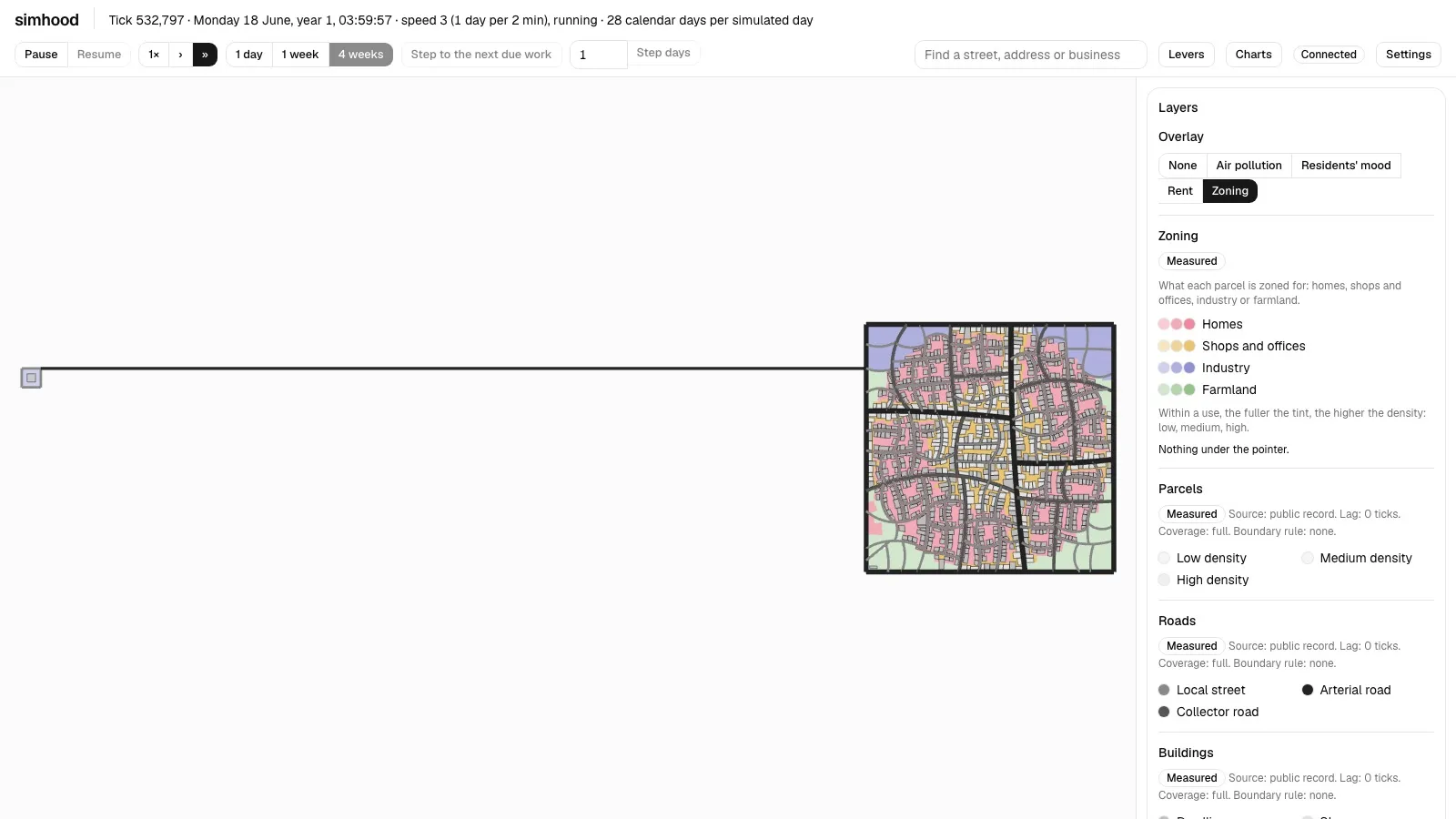
The dashboard’s Zoning overlay. Pink is homes, yellow shops and offices, purple industry, green farmland; a fuller tint is a higher density. The long line is the new highway, ending at the gateway square on the left.
In the 3D client the same overlay tints every plot, a little above the ground and under the buildings.
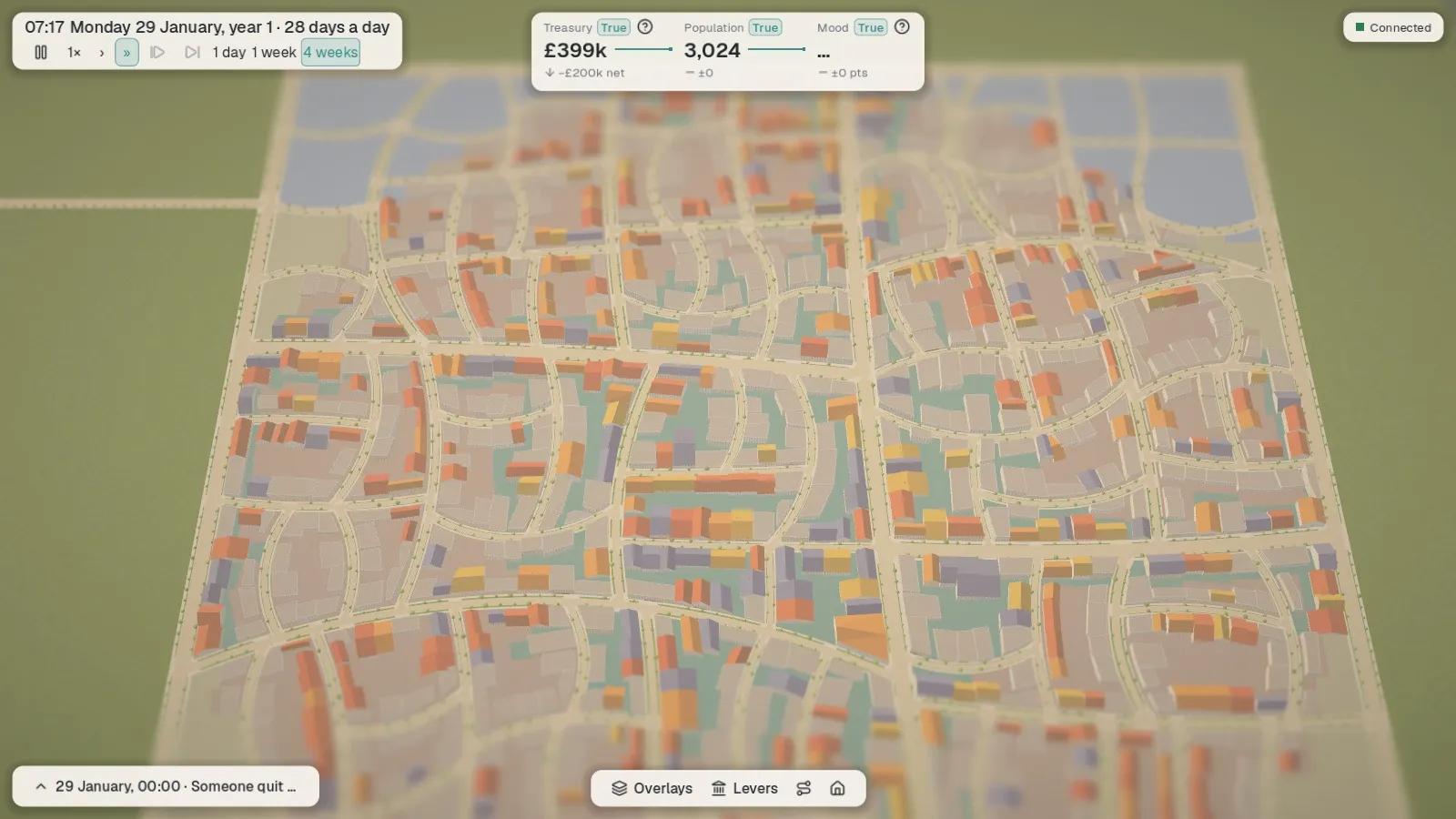
The zone overlay on the whole town, a month in.
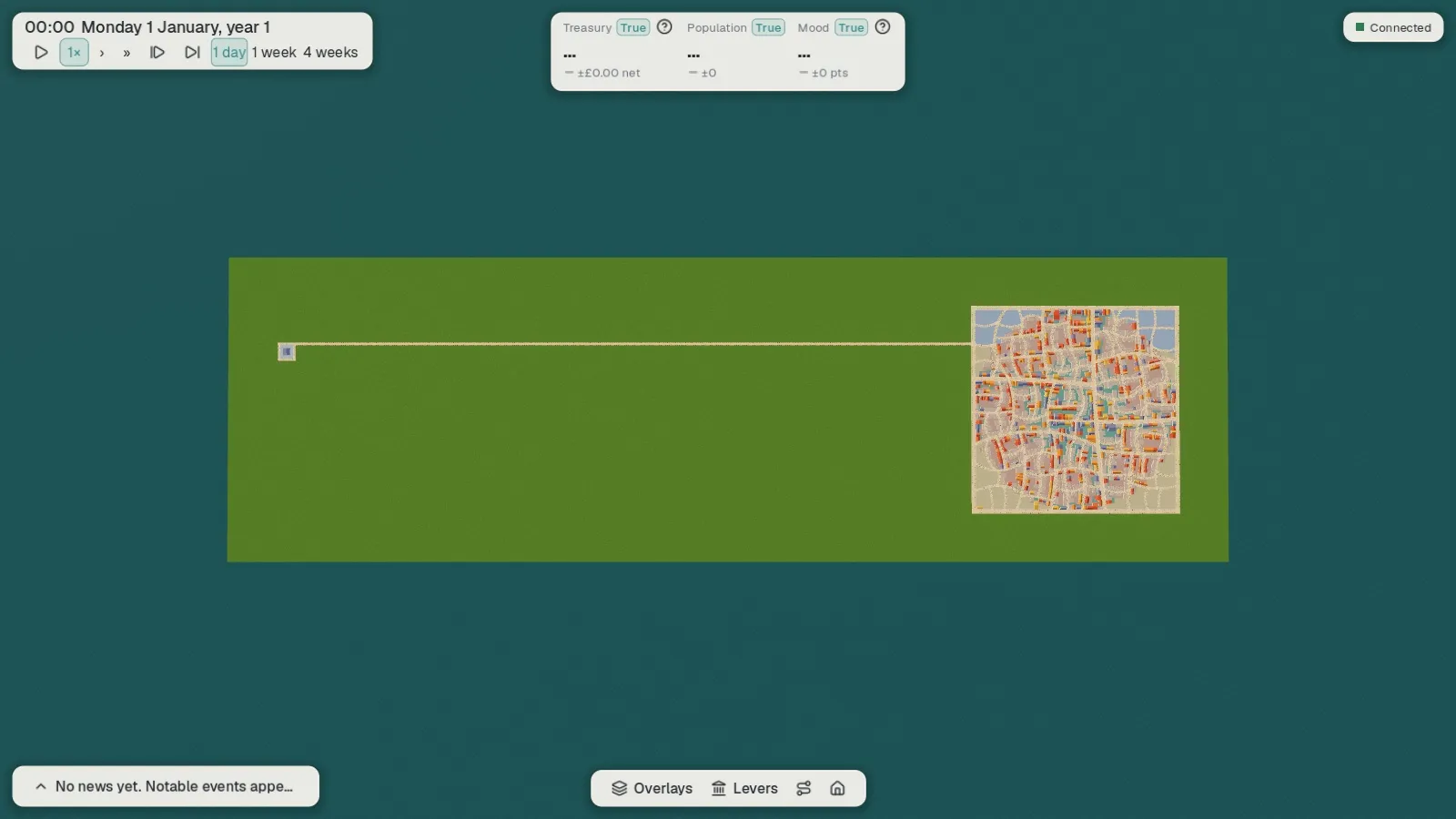
Straight down on the whole map, overlay on: the town on the right and its highway leaving to the left.
Painting zones
Press Z, or the Zones button, to open the palette: pick a use and a density, then drag over the plots you want to change. Shift-click zones the whole block under the pointer. The tool only asks; the town decides and the bar reports what was changed or why not. New streets are zoned automatically for what is beside them, so a street you lay does not end up lined with unzoned land.
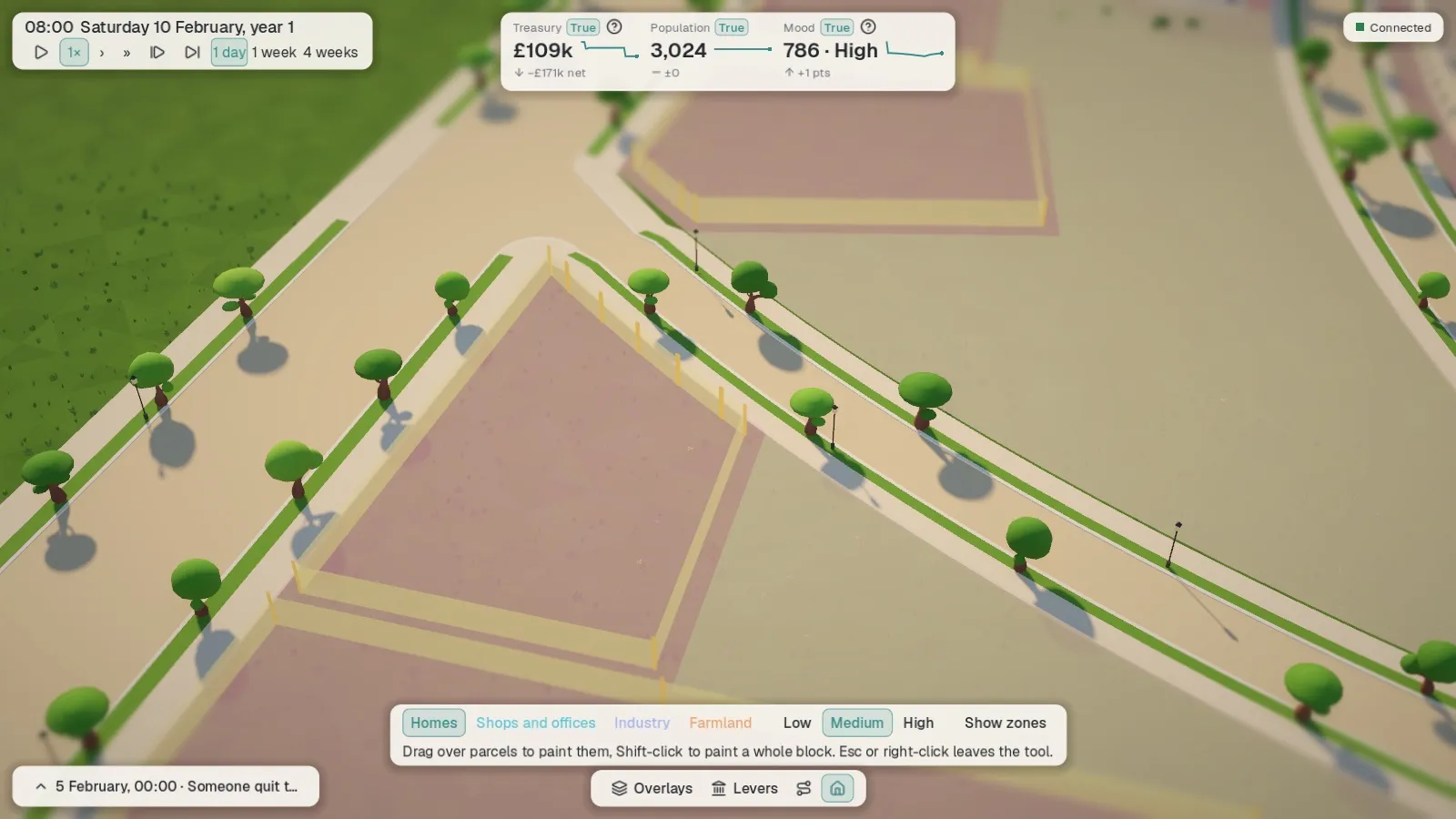
The zone palette, over the town’s streets.
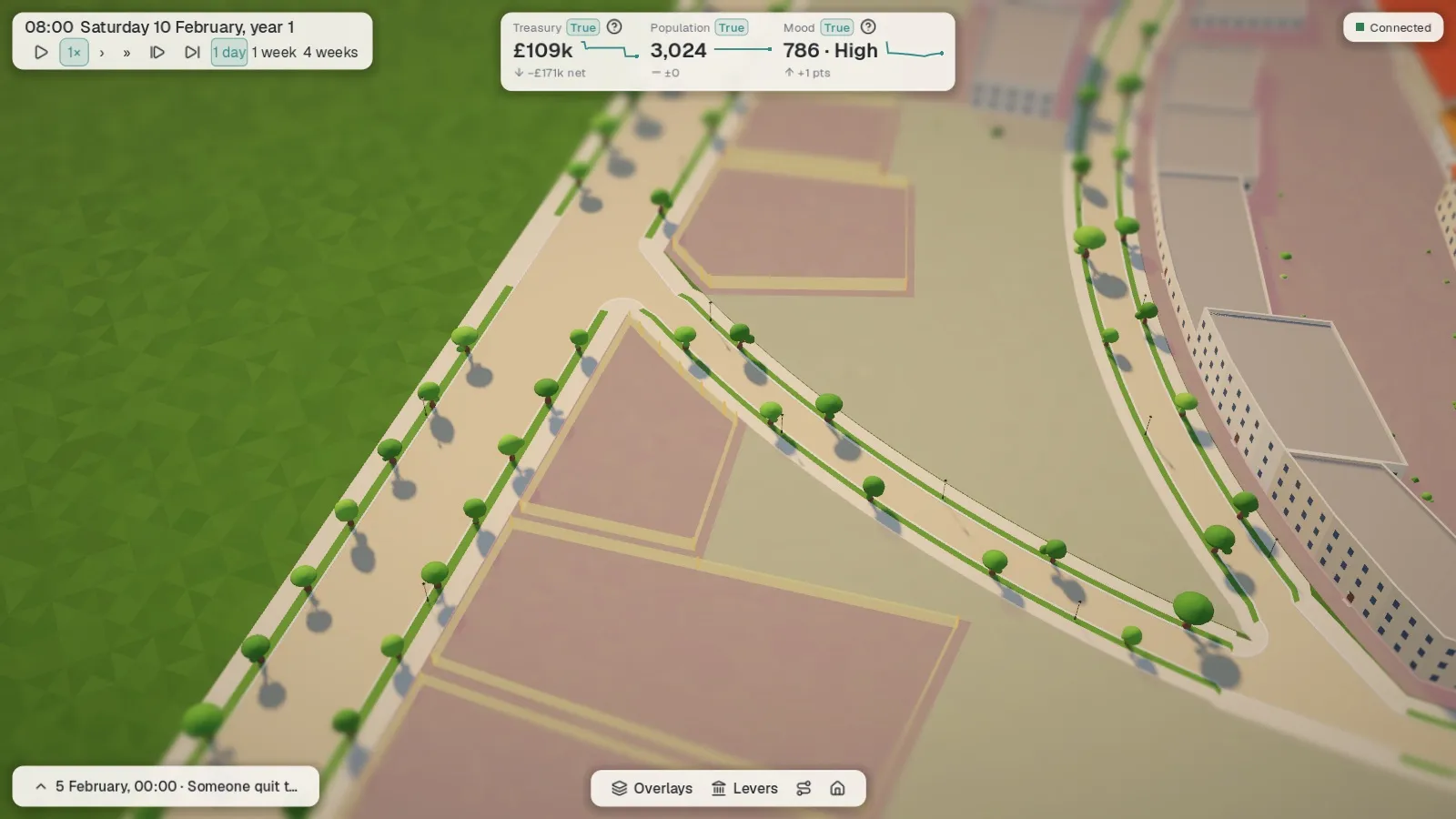
Plots beside a street the council built, tinted with the zone they were given automatically.
Developers build where it pays
Zoning only says what may go up. Whether it does depends on developers, who build where the rent they expect is worth more than the cost. A site that is being built shows as a scaffold: a fenced box, as tall as the finished building will be, filling up as the developer pays for it. When it is finished the building gets an address and its tenants move in; a site that runs out of money stalls and goes grey.
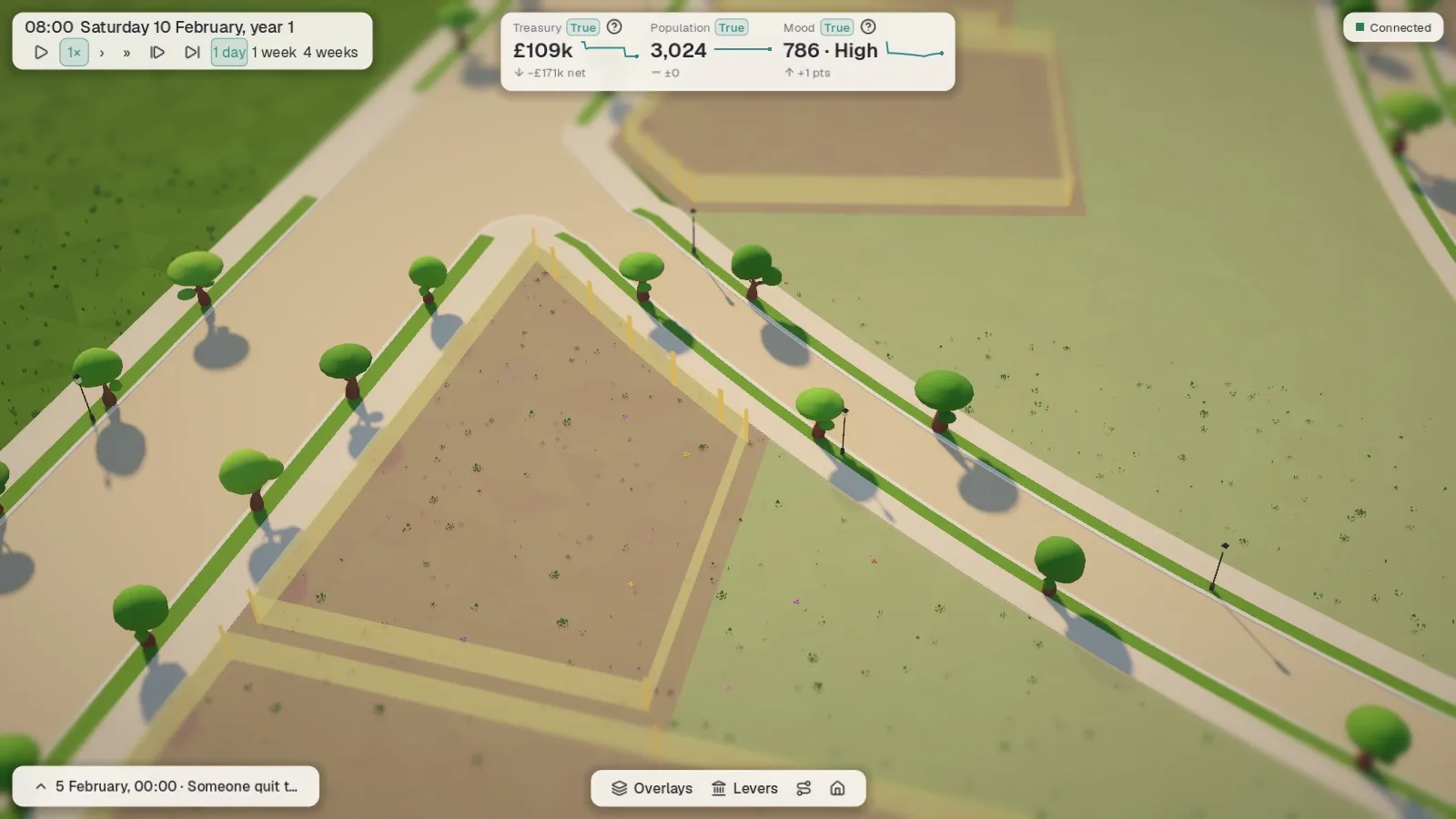
A construction site on the new street. The fence is as tall as the finished building will be.
To see the whole loop we painted 65 empty plots on the town’s western edge as medium-density homes on day 5 and played one year.
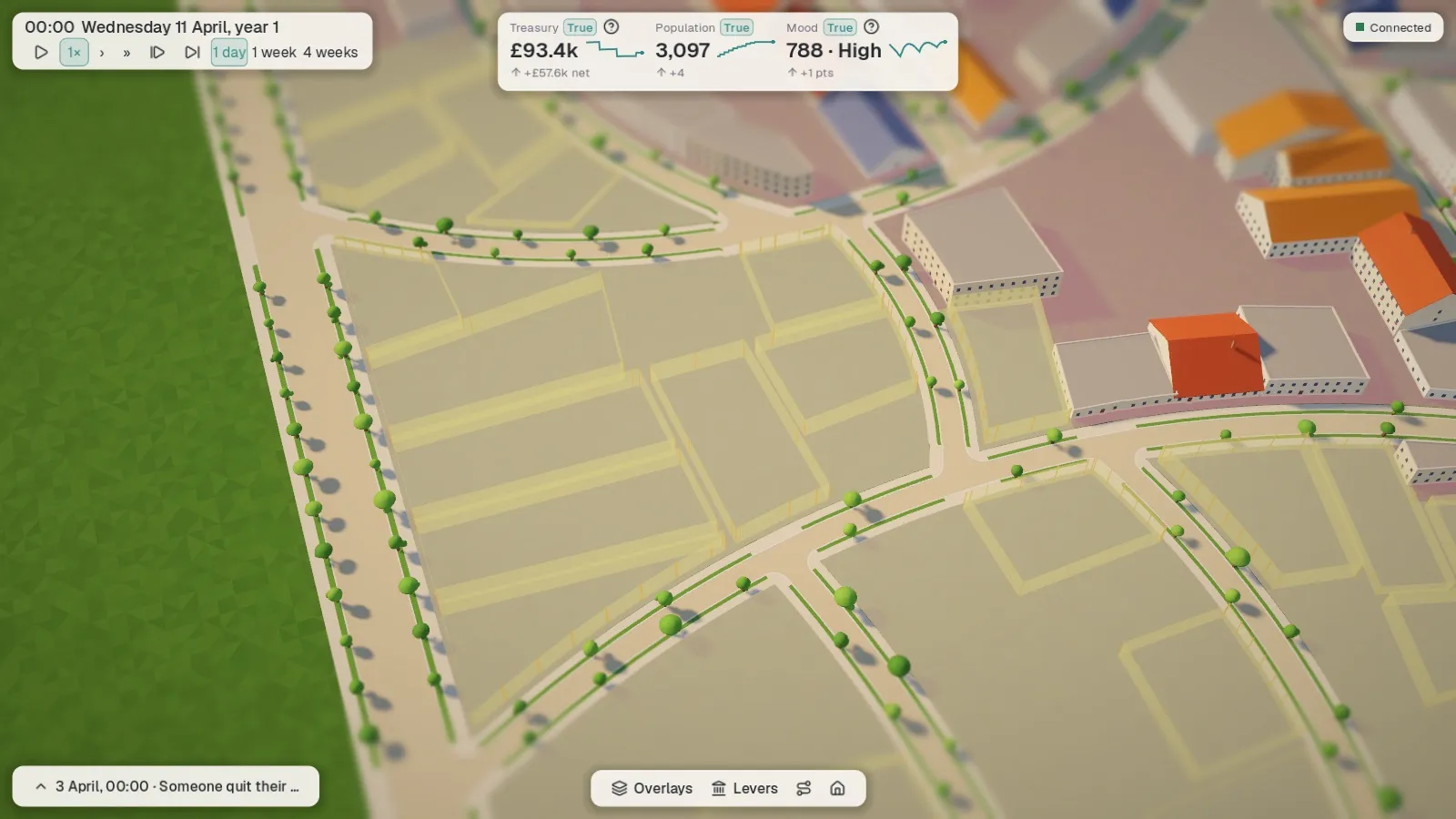
Day 100. Look at the tall translucent boxes on the empty, tinted land at the left: 28 construction sites, each three floors, started within the first 70 days. Nothing is finished yet, because a three-floor block takes 120 days.
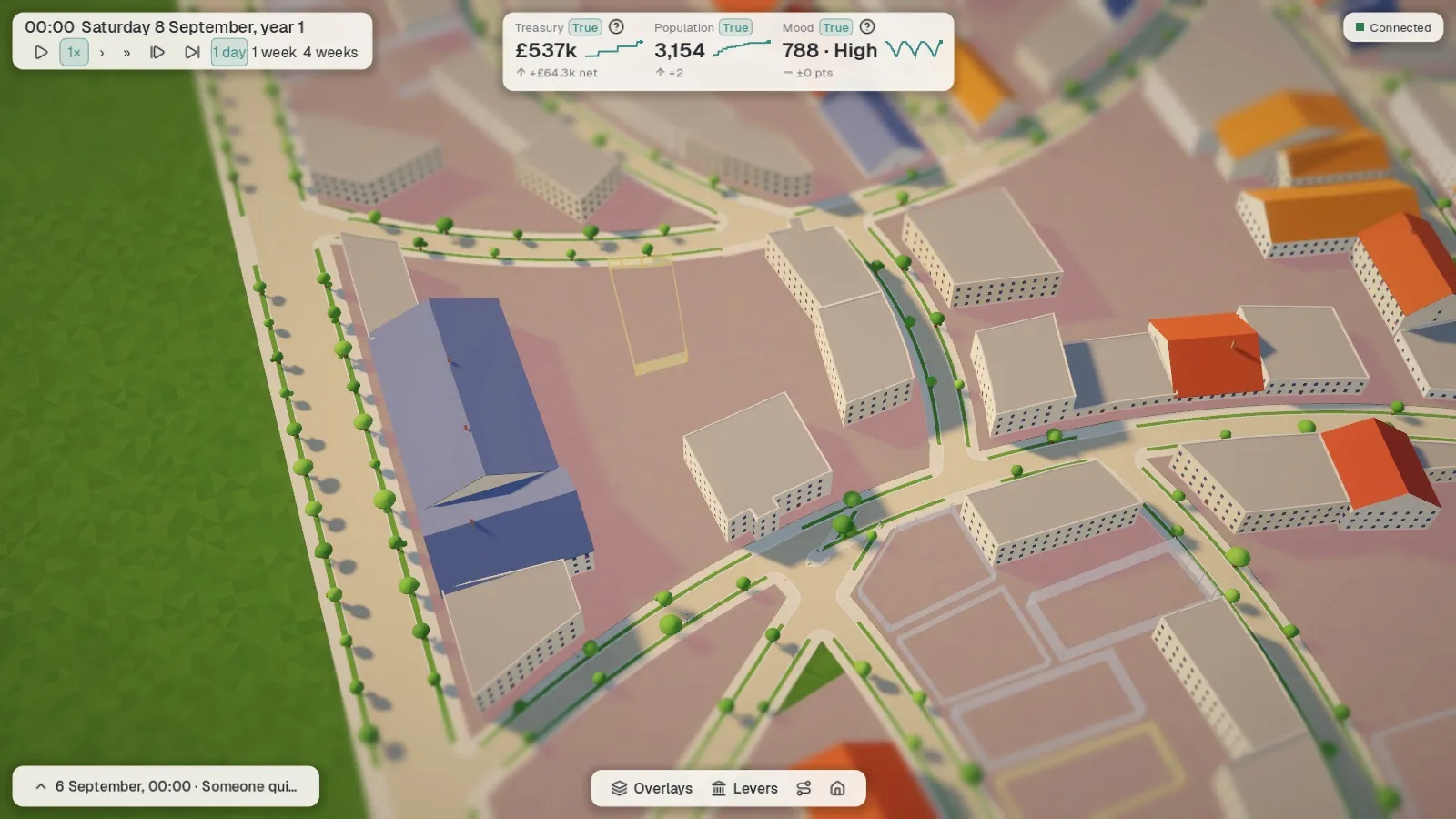
Day 250, the same view. The land at the left now has finished blocks of homes. All 28 of the first sites are done, and 136 people have moved in from outside (the population went from 3,024 to 3,154). This shot was taken before we raised the developers’ starting money: the pale outlines are sites that ran out of it. With the new amount, every site started in that year finishes.
A highway to the outside
With this version the town is no longer alone. A generated highway runs from the town to a gateway at the edge of the map, standing for the rest of the country. People who live in town can commute out to jobs beyond it, and people from outside commute in to fill jobs the town can’t. Households also move in when the town has both jobs and empty homes for them, and move away when they have been out of work for months. In a year of the test town, 61 to 90 people move in, about 75 residents work outside and about 90 outsiders work in town. Employment still sits at 98 to 99%, above England’s level, because almost nobody stays out of work long enough to leave.
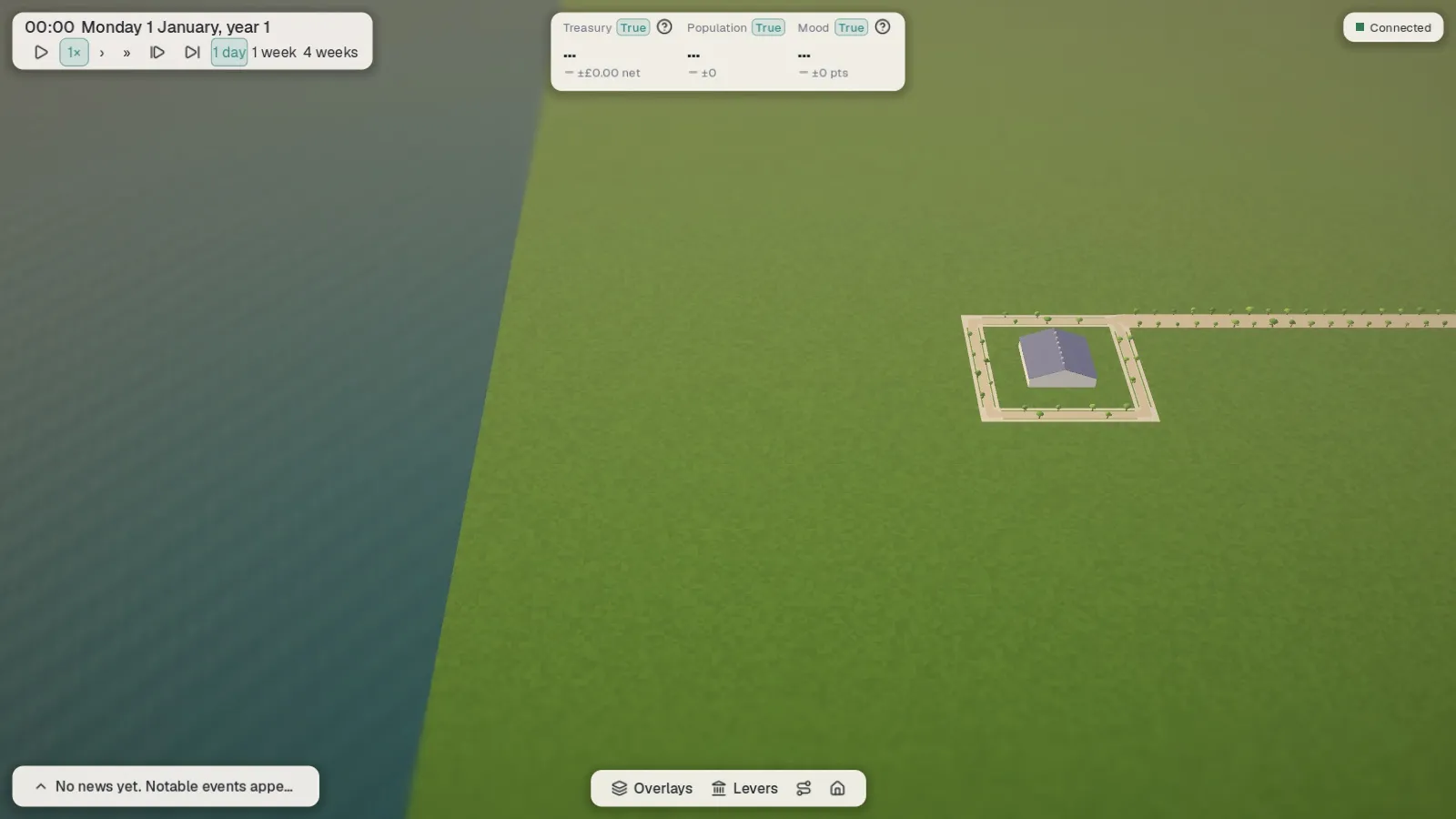
The gateway at the edge of the map, with the highway leaving to the right towards the town.
What is early
These are early builds. The gateway is a single placeholder building, and the tuning of when developers build and how many people come and go has had little play yet. In the painted year, starts paused from day 70 to day 125 while the first blocks were still under way, because homes being built already count as homes on offer. Developers earn rent from what they build, but only about 5% of the cost a year, so they live off their starting money: our first run gave them too little, and by day 250 it was gone and 18 sites stalled. We raised it to £20 million per developer, and in the same year all 43 sites started then finished. Moving in still stops early: about 140 people arrived, then arrivals stopped, because unemployment had reached the 4% the town aims for while some 60 new homes stood empty. The loop works, and what it needs next is jobs for the newcomers.
Next: industry and farms working on the outskirts, and skills and wages for the people who work in them.