 simhood
- simulation
- terrain
- graphics
Real land
Until today every town stood on an endless flat lawn. Now the simulation generates the land first: hills and mountains, rivers that run downhill to the sea or a lake, coasts and islands, and a climate that decides where forests, grassland, desert and snow go. The town is then built on whatever land it gets. Streets keep off steep slopes and open water, cross narrow rivers on bridges, and nothing is built on land that is too steep or under water.
There are five kinds of land to start on: flat, a river valley, an archipelago, an alpine valley and a desert. Each takes its climate from a real place, so the desert’s rainfall and the islands’ mild weather come from real weather station records. The same seed always gives the same land.
An island town
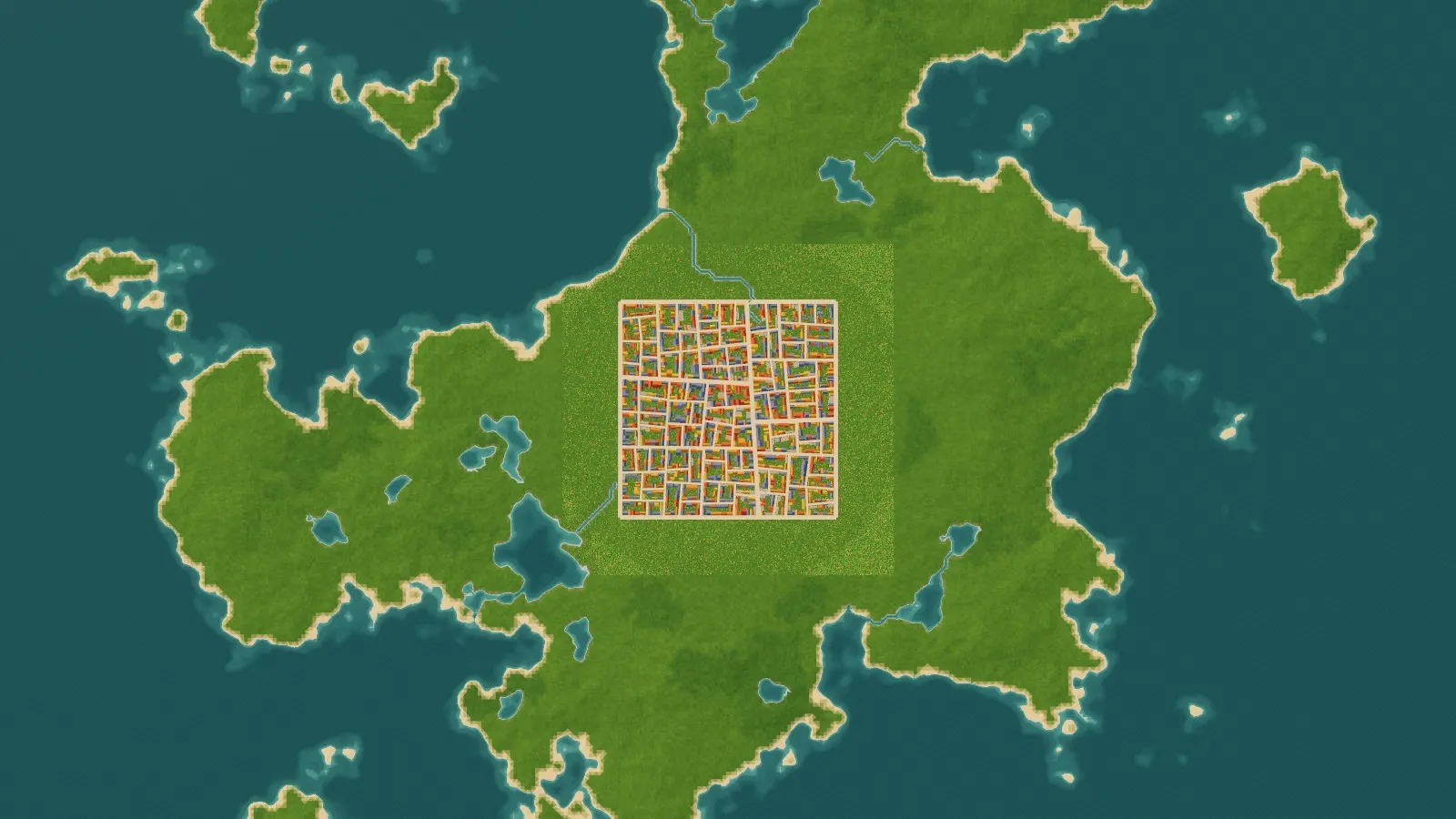
The archipelago: the town sits on the main island, with beaches round every shore, lakes inland and small islands offshore.
A river valley
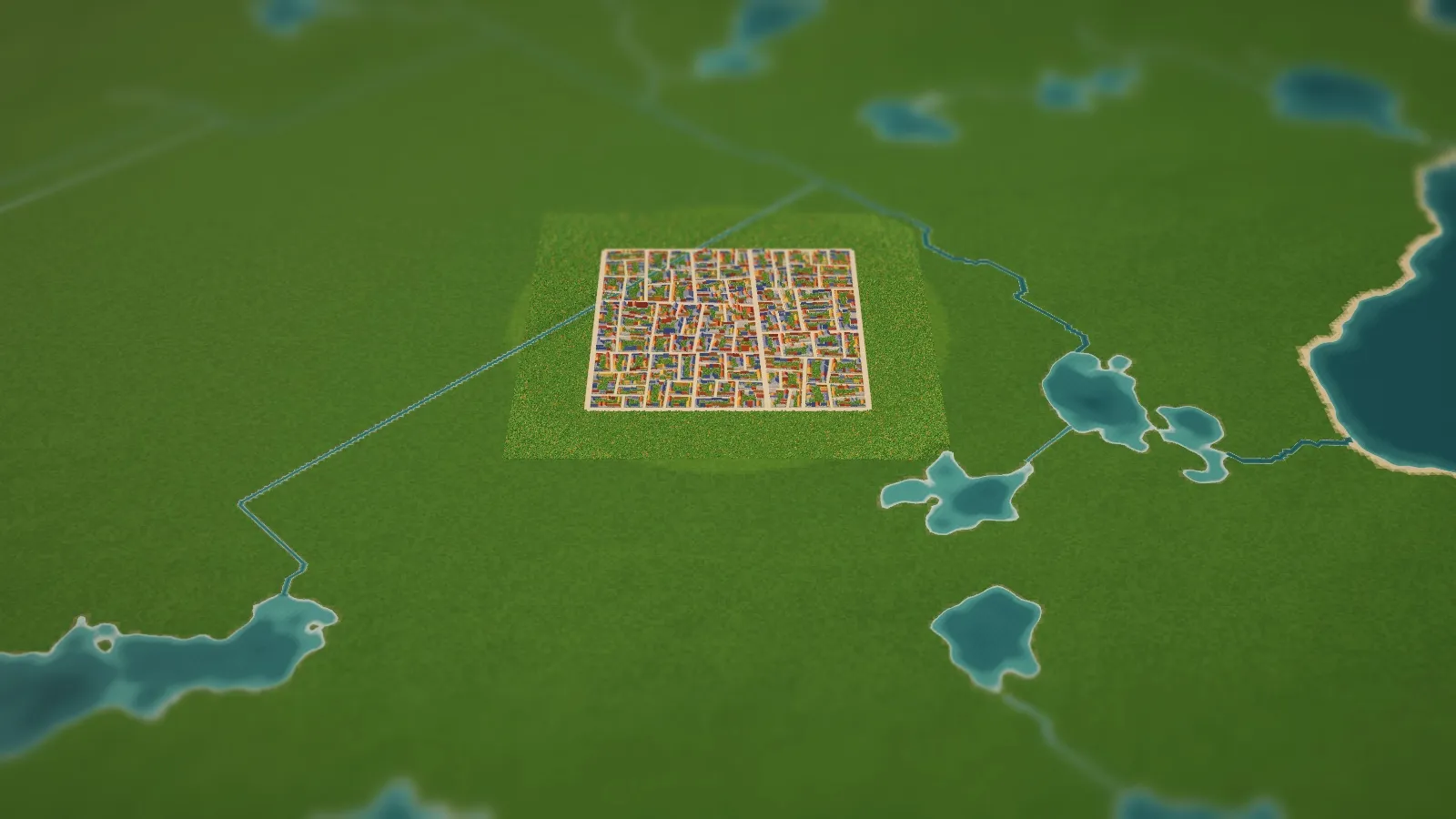
The river valley from high up: woods and meadows, a chain of lakes, rivers draining to the sea on the right, and the town in the middle.
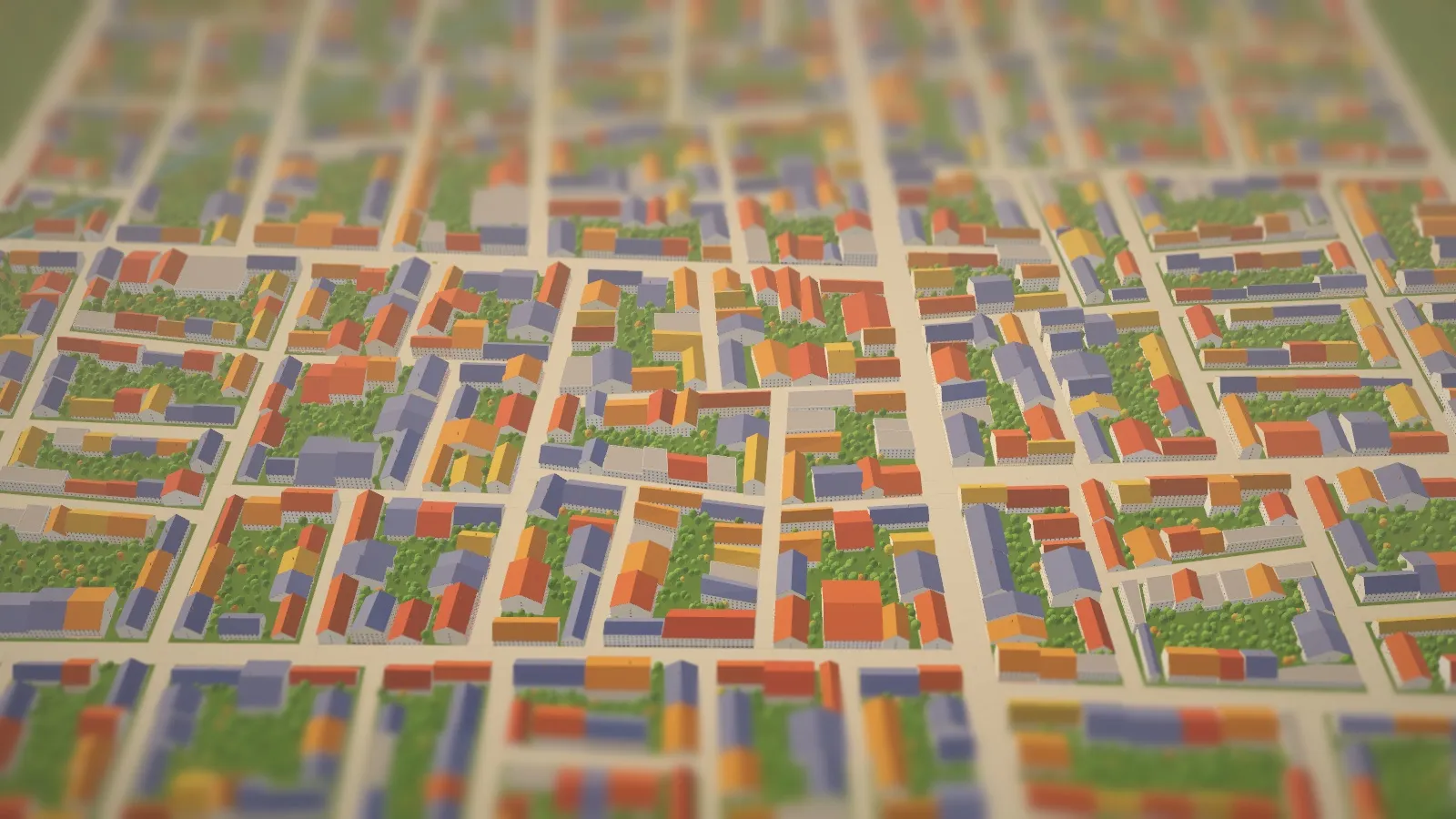
Closer in, the woods reach into the town: trees grow in the gardens between the houses, because the land underneath is forest now, not lawn.
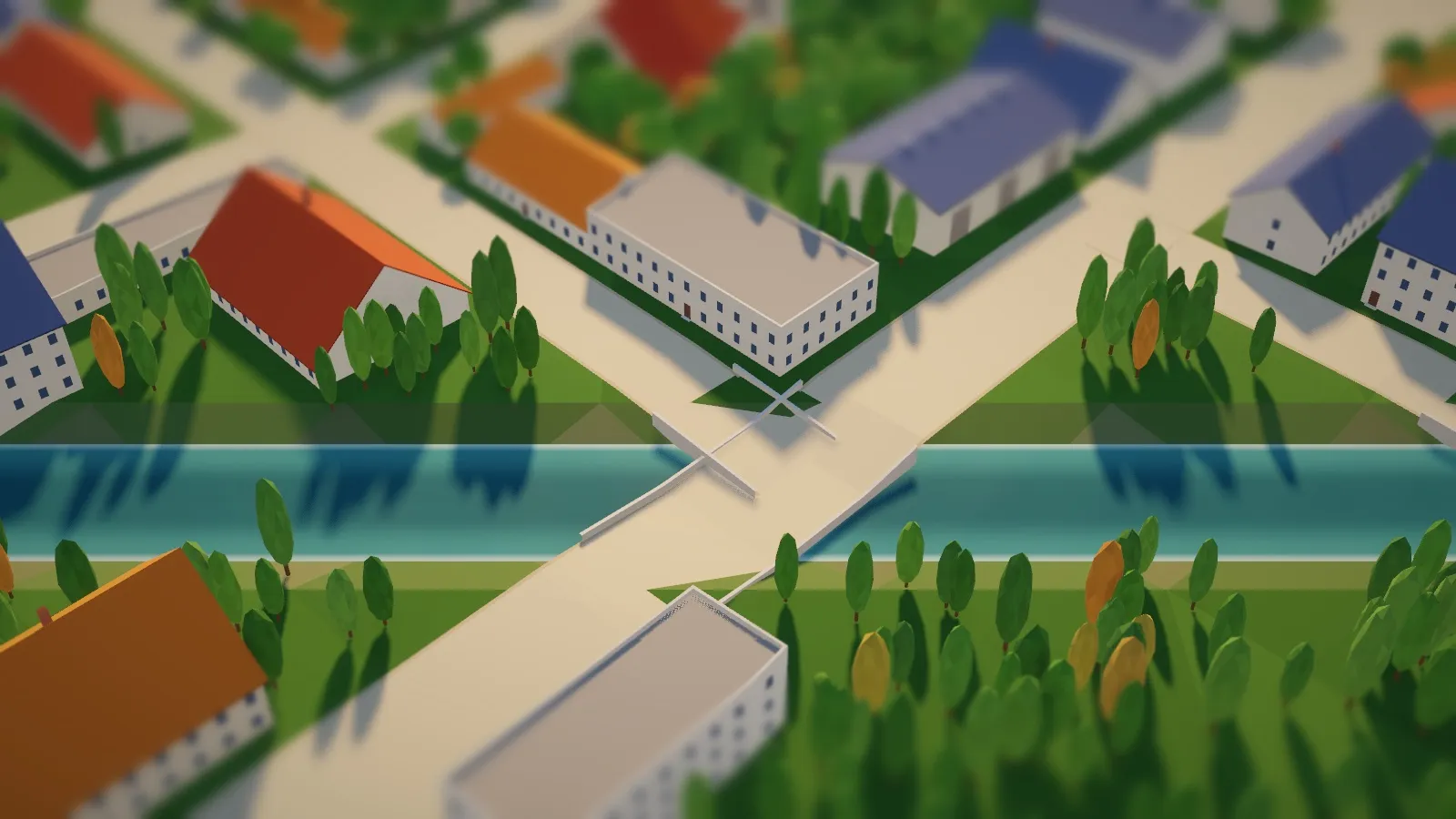
Where a street has to cross the river, it gets a bridge.
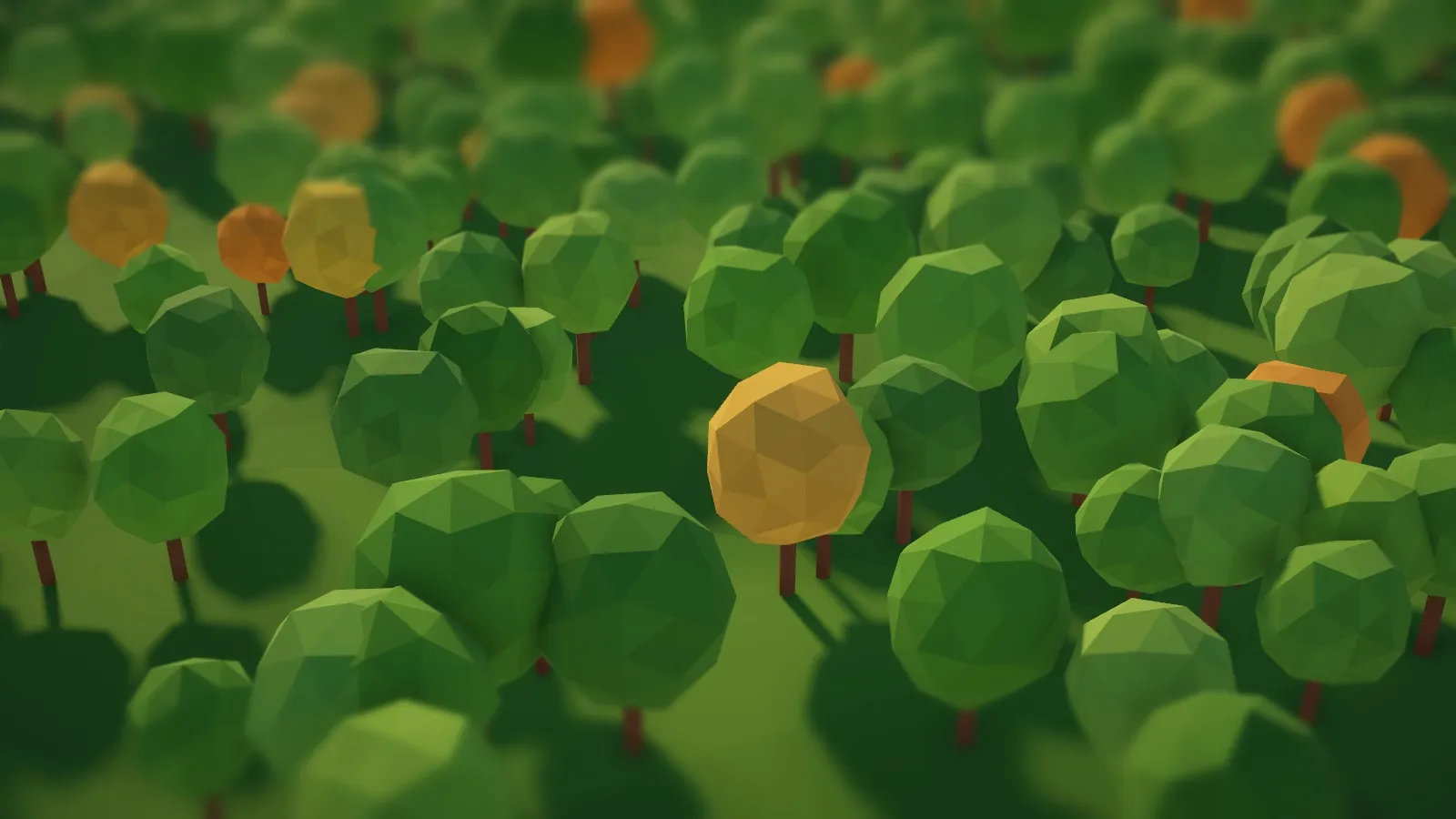
The woods south of the town, up close.
A desert
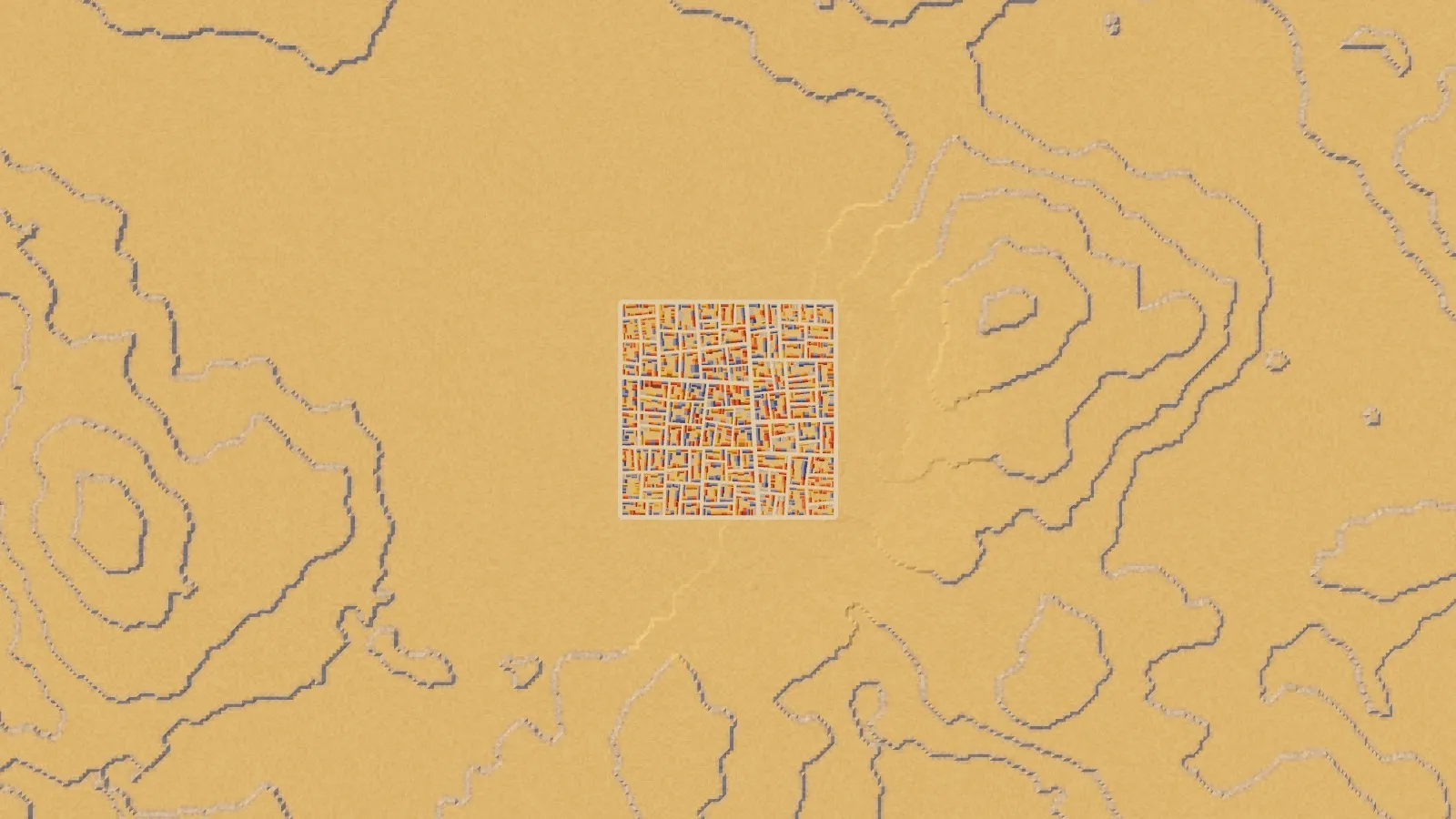
The desert: dry plateaus with terraced rock steps, no rivers at all, and a dense town in the middle.
What doesn’t work yet
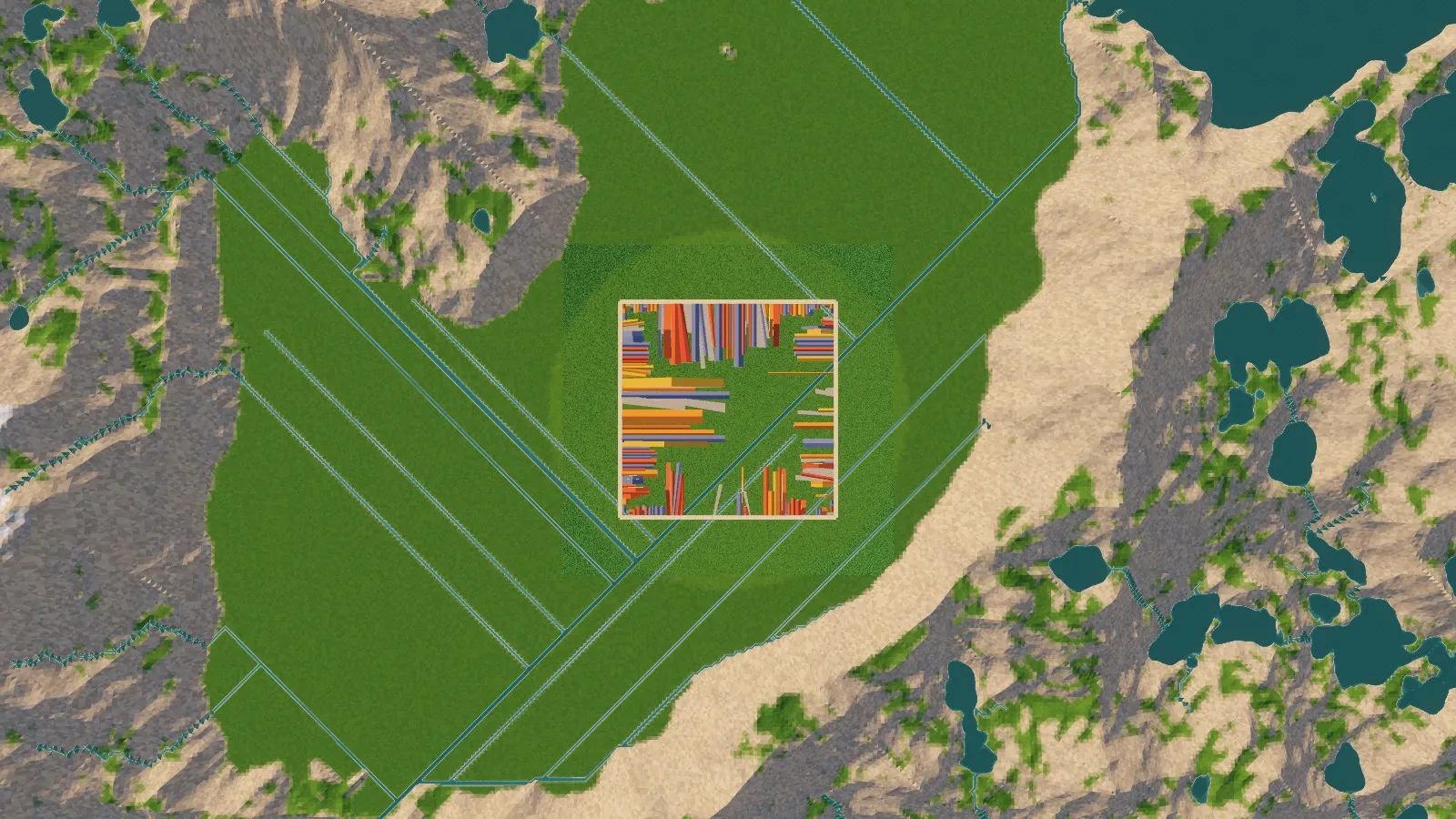
The alpine valley shows both of today’s problems at once.
- Rivers on flat ground run as ruler-straight lines. Where the valley floor is level, water has no slope to follow, so the rivers cut straight diagonals. Making them wander across flats is next on the list.
- Hill towns fall apart. When the ground beside a river is too steep for a street, the town builder gives up on the streets it can’t lay and leaves huge plots instead, so the alpine town above is a handful of long strips. Streets that follow the contours of a hill are planned.
- Up close, the coast steps in squares, one per 20 m patch of land. The ground needs smoothing at that distance.