Wanted: models for a whole town
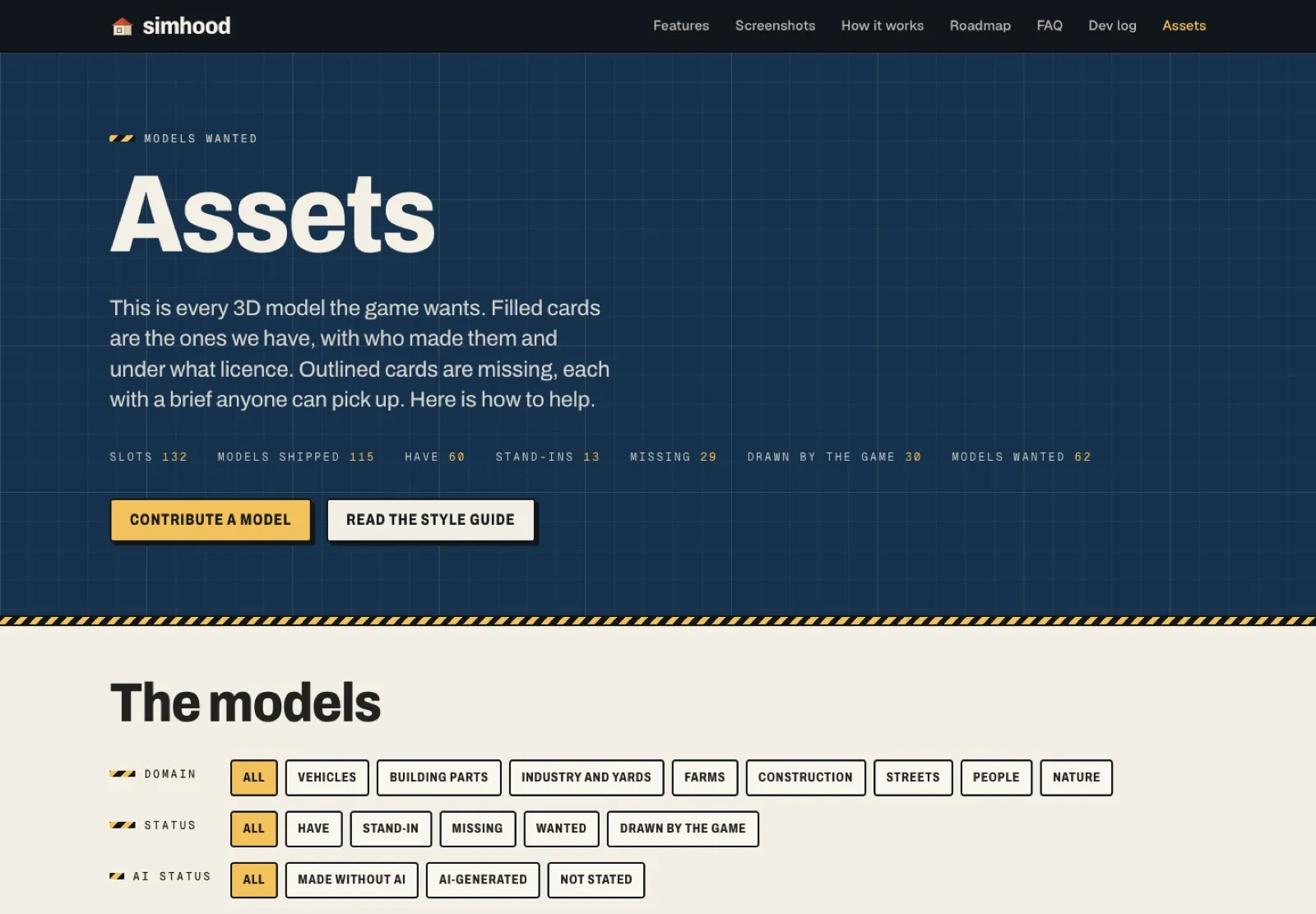
The top of the new Assets page. The counts along the middle are the honest state of things: 132 places the game wants a model, 73 of them filled (13 of those only by stand-ins), 29 still missing.
Last time I spent a day shopping for free models for the town, kept 82 and ended with a list of gaps: lorries, a full-size bus, a red phone box, sash windows, a barn. A list in a blog post goes stale the moment you publish it, and it is no use to anyone who wants to help. So the list is now a page: simhood.aurbano.eu/assets.
The goal of this post: show the page, and say how anyone can add a model to the game.
Every model the game wants, on one page
The page has a card for each place the game wants a model, 132 of them, and the 115 models we have so far fill 73 of those places (a place can hold several variants, such as the cars). A filled card shows the model, who made it, the licence, what was changed from the original, its size and triangle count, and a link to the file and to its source. An outlined card with a dashed box is a gap, and it carries a brief: the real-world size to aim for, a triangle budget, what should be tintable and a sentence on what it is for. 62 models are wanted in all, some marked high priority, like the rigid lorry, the articulated lorry and the bin lorry in the picture.
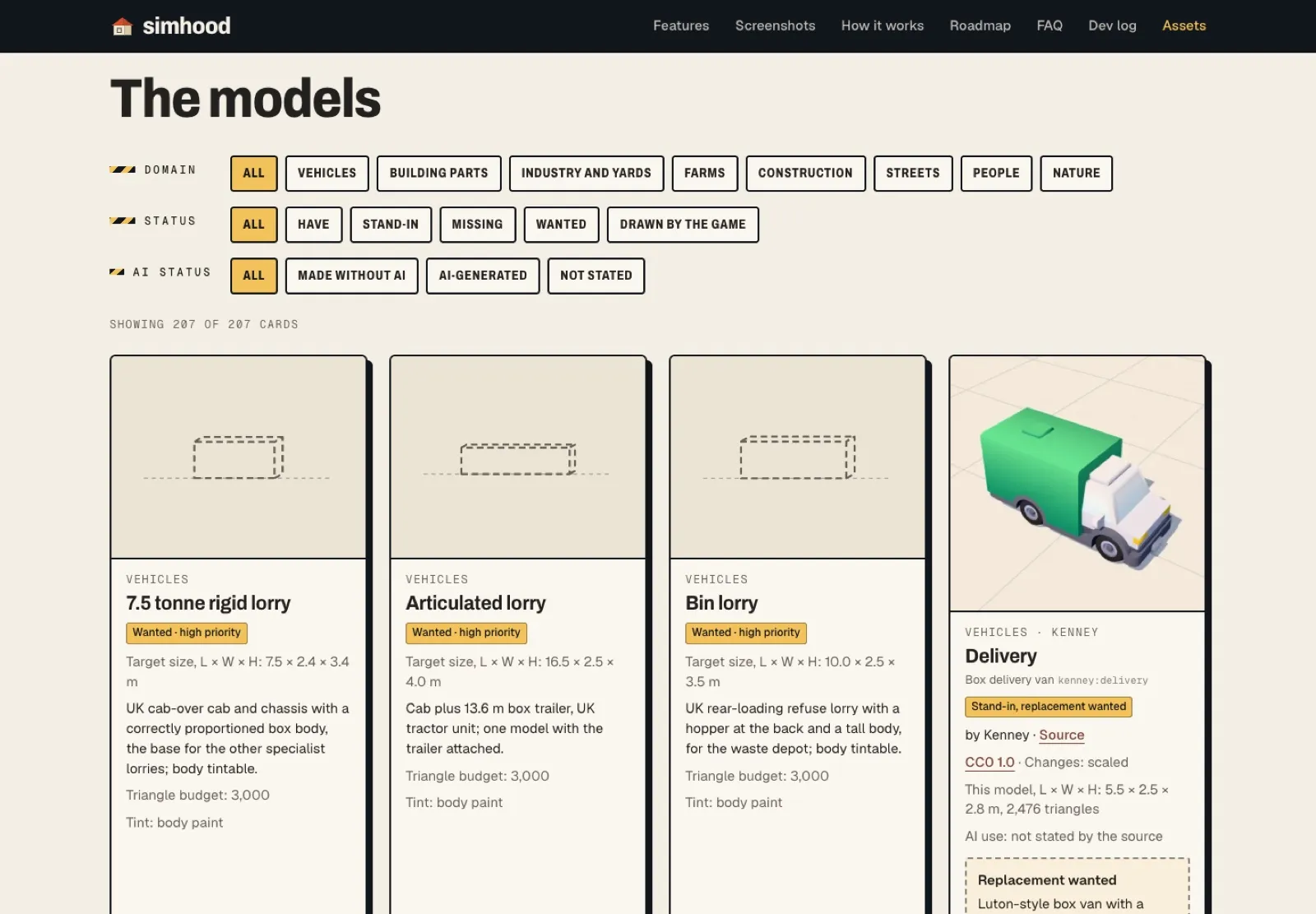
Gaps and stand-ins side by side. The three outlined cards are missing models, each with its brief. The green delivery van is a stand-in: it is fine for now, but a better one is wanted.
Every card is filterable by kind of thing and by status. A stand-in is a model that fills the place for now but is not what the game should end up with: of the 73 places with a model, 13 hold stand-ins, such as the toy-proportioned delivery van and tractor, a phone box that is not the red one, and a bus shelter that does not look British. (The day after this post went up I went through every filled card again and moved a dozen models that sit well in the family from stand-in to have, so these are the reviewed numbers.) Another 30 places are things the game builds itself from simple shapes, such as whole buildings, post boxes and dry-stone walls, so no model is wanted there; their cards say “drawn by the game”. And most of the models we have are not on screen yet: the game still has to be taught each new kind of model before it can use it, and today it draws only cars, trees, bushes, grass and rocks from these files. These are placeholders and gaps, not final art.
Look at the file itself
Each model has a button that opens the file in a 3D viewer, in its own colours, so you can turn it round and check it is what the card says it is.
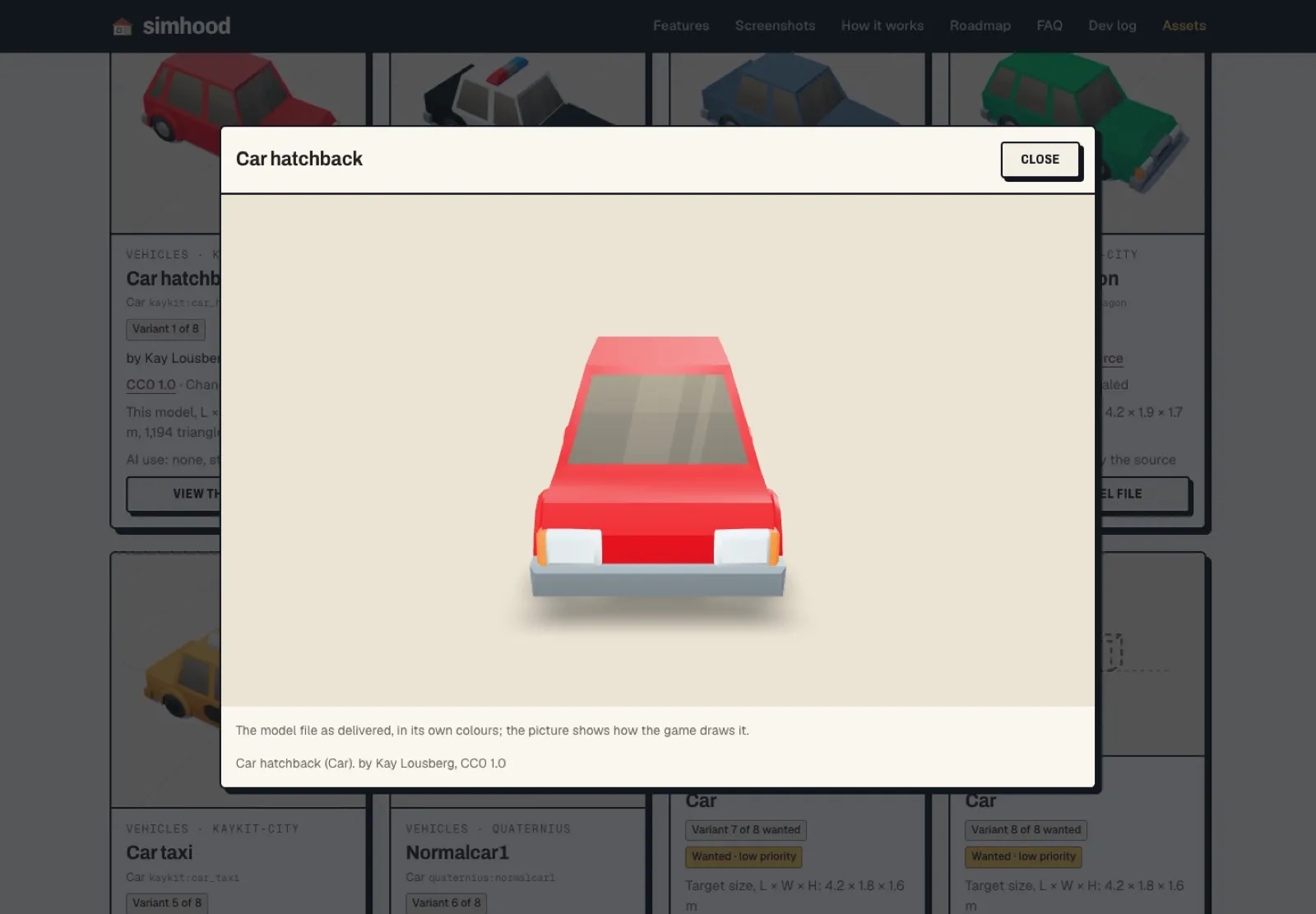
The viewer, open on one of the cars the game already draws. The caption repeats who made it and under which licence.
How to help
- Pick a place. Choose an outlined card, or a stand-in you could beat, and press “Claim this slot” on its card, so nobody makes the same thing twice.
- Make or find a model. It must be licensed CC0 or CC-BY, the licences that let the game use and share it freely; CC-BY needs a credit, which I am glad to give. You can model it yourself or use someone else’s, as long as the licence is saved with it. Nothing non-commercial, nothing share-alike, nothing unclear.
- Open a pull request to the public repository of models, github.com/aurbano/simhood-assets. Automatic checks measure the model (size, triangles, colours, licence) and post a picture of it on the pull request, so you see straight away what I will see.
- I review it. I look at it next to the rest of the town, may tweak it (a colour, a scale) and merge it. From there it flows into the game’s copy of the models and onto the board with your name on it.
The Contribute button on the page walks through this step by step.
The style guide, and what gets turned down
Models have to look like one family: chunky, clean, flat-shaded, soft colours, real proportions, readable from far away. The page has a style guide that spells this out, and a set of examples that fit and others that I turned down. The turned-down ones are good models that are simply a different game: a photographic brick corner, a big-headed toy character, a leaf-card tree, a toy-proportioned car, a rusty, stained air-conditioner.
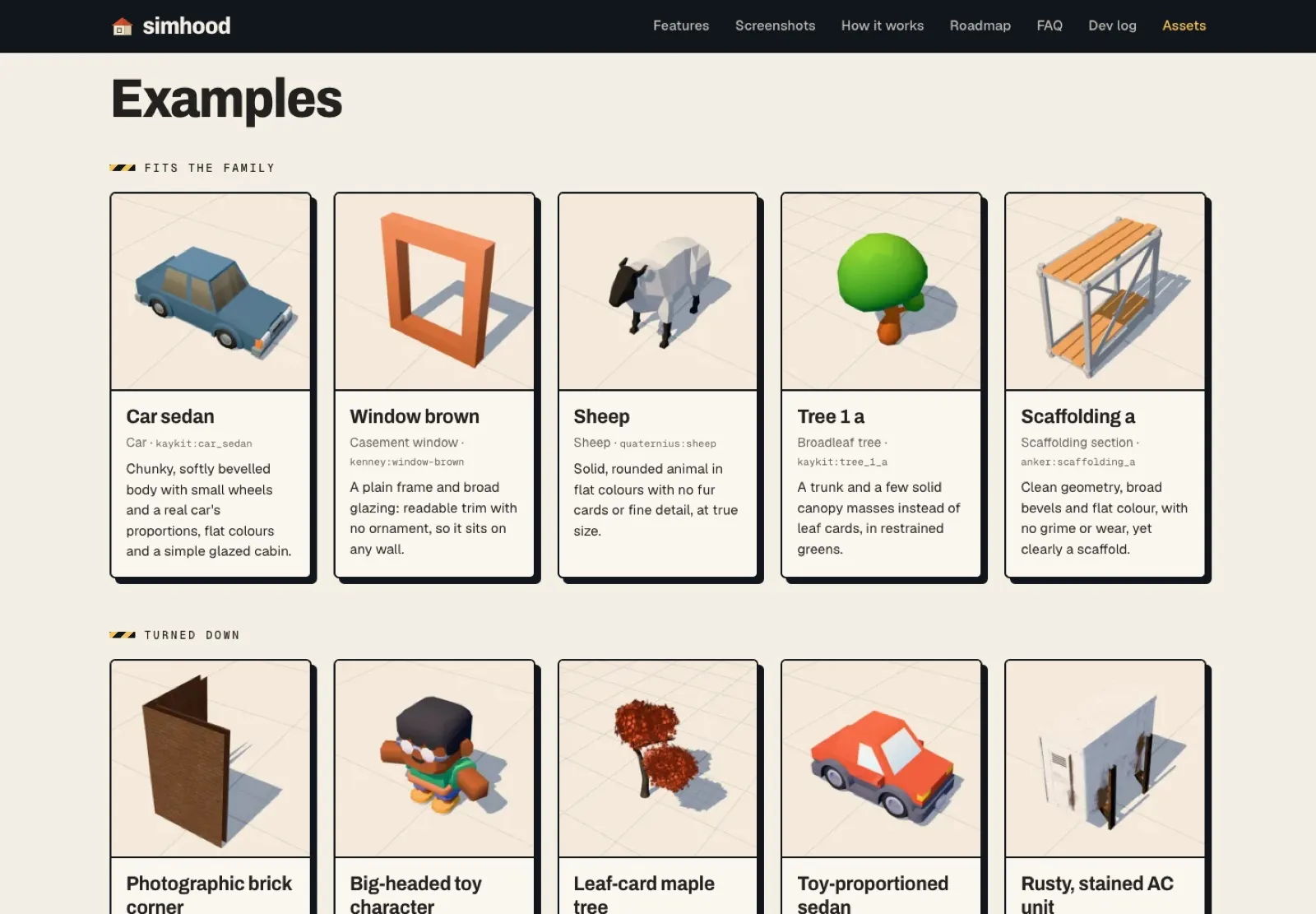
Fits the family, above; turned down, below. Look at the difference in surface: flat colour and clean shapes against photographic texture and toy proportions.
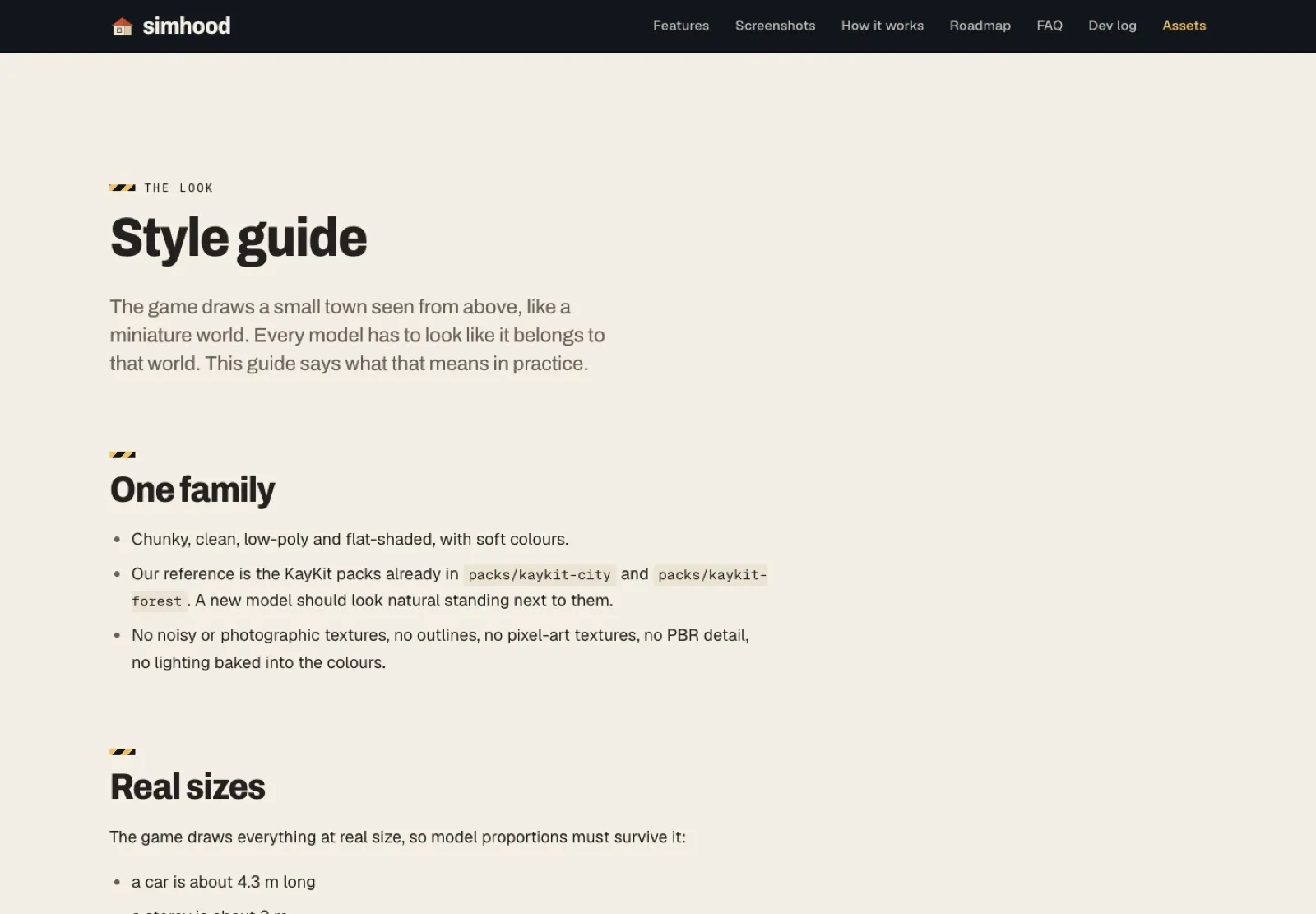
The written style guide, with the same tests I used last time: one family, tintable, real sizes, readable from far away.
About AI
Models made with AI tools are accepted, but only if you say so when you contribute, and then the card says so too. Every card carries a line on how the model was made. At the moment 46 of the 115 are stated as made without AI, none is declared AI-made yet, and for 69 the original source does not say, which the page marks “not stated”. You can filter by it.
What comes next
The game needs to learn to draw the new kinds of model, starting with the ones it has somewhere to put: street furniture along the pavements, props on building sites and people on foot, so the models already on this page start appearing in the town. Vans, lorries, buses and bicycles come once the simulation itself has deliveries, freight, buses and cycling. Then the first contributions, which will show whether the checks and the review are as smooth as I hope; I expect to find rough edges and fix them. If you make something for a lorry-shaped hole, I would love to see it.