A week a day, or a month
A town that runs one real day per simulated day needs about twelve hours of play to get through a year at the fastest ordinary speed. That is right for watching a crisis and far too slow for a four-year term. The clock now has a second control beside the speeds: how much calendar each day on the clock covers.
Three choices
The choices are 1 day, 1 week and 4 weeks. A new game from pnpm play starts at one week per day; pnpm play --compression 1 starts at one day per day, and the dashboard’s pnpm start stays at one day, because it is the research view.
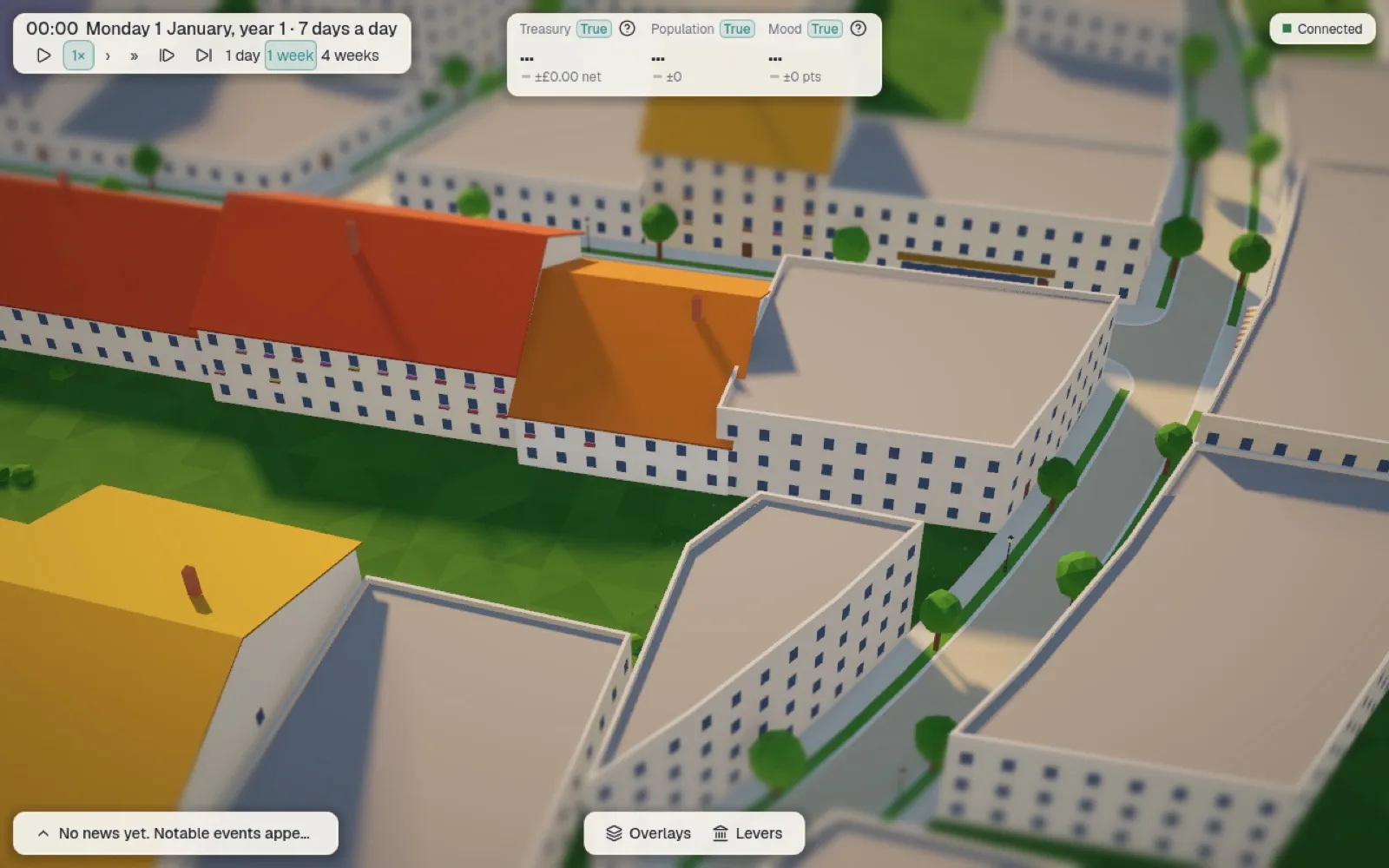
A new game from pnpm play: the clock names the compression (“7 days a day”) and “1 week” is highlighted.
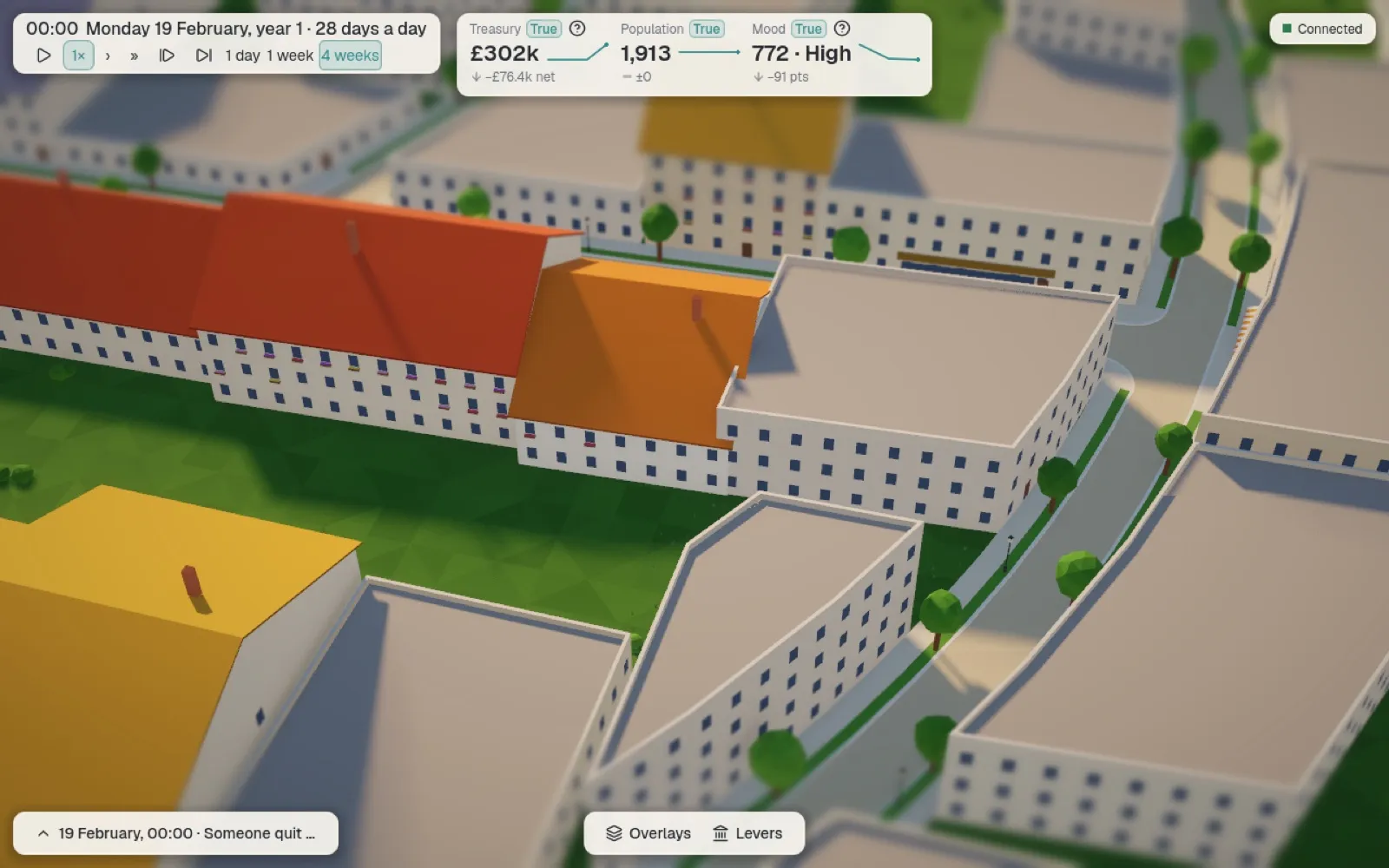
“4 weeks” pressed on a running town. The change takes effect from the next day on the clock, so the date never jumps.
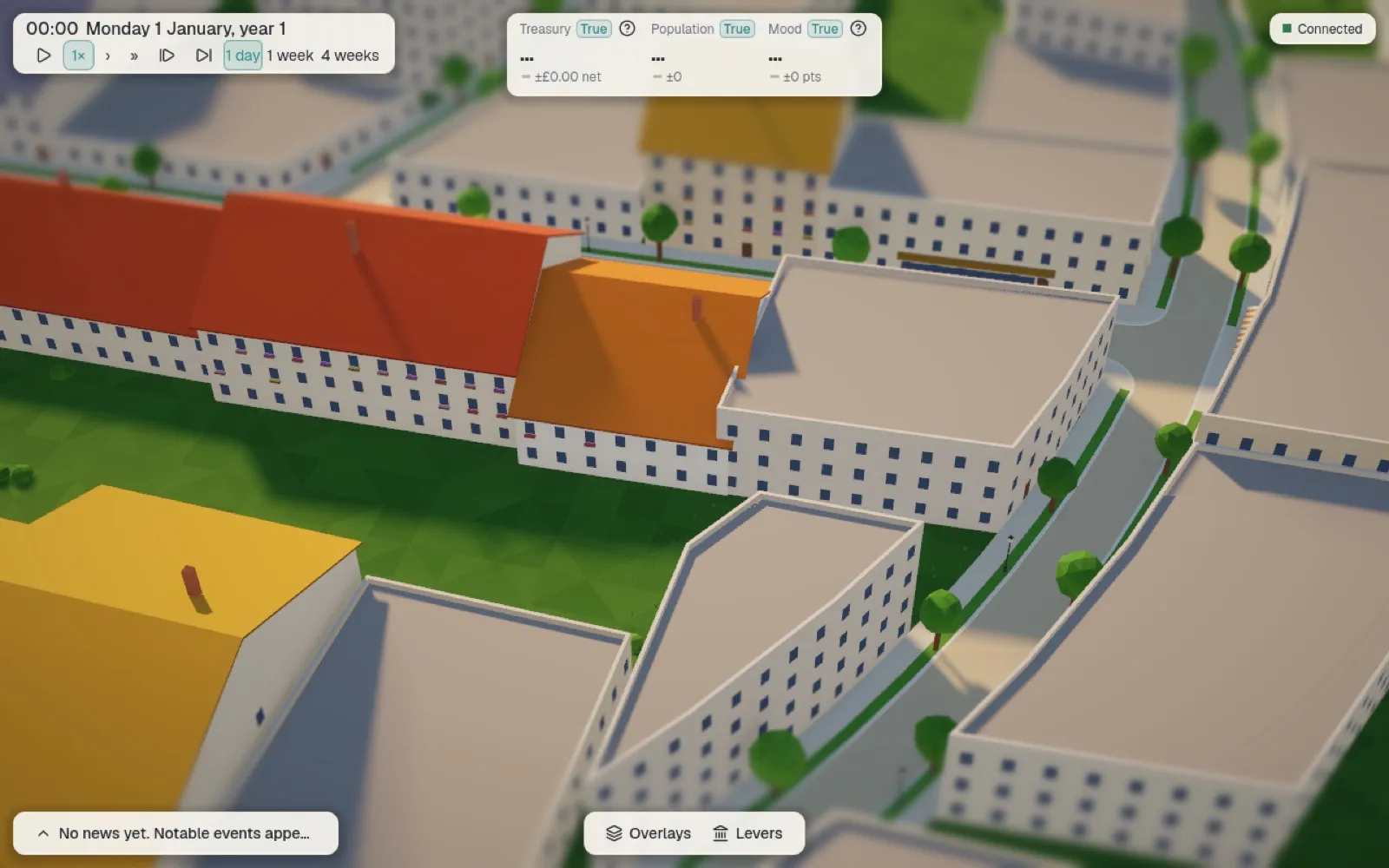
Started at one day per day, the clock shows no compression note.
How long a year takes
At speed 3 (a simulated day in two real minutes), a calendar year takes about:
| Choice | Simulated days a year | Real time at speed 3 |
|---|---|---|
| 1 day | 365 | about 12 hours |
| 1 week | 52 | about 1 hour 45 minutes |
| 4 weeks | 13 | about 26 minutes |
A four-year term at a week a day is about seven hours, and at four weeks a day about one and three-quarter hours.
The town keeps its pace
A day that stands for a week must not make wages, rent, prices, shop stock, hunger, mood or air pollution move seven times too fast or too slow, so every rate in the simulation now counts the calendar days a day stands for. Chances such as finding a job compound over the days instead of being multiplied, and monthly things such as rent, pay day and taxes still happen on the calendar. We checked this over 30 towns: the economy settles to the same levels at a week and at four weeks as at a day (employment, for example, comes out slightly higher, because a town looks for work once a day however long the day is). One difference remains at four weeks a day: grocery and hairdresser prices drift up a little faster over a year than at one day, and we are deciding whether to fix that before calling the four-week setting finished.
What is lost is variation inside a day that stands for 28: people plan one day, shops decide on one reading of the market, and the date and the day of the week no longer match (a “Monday” can plan a weekend).
What comes next
The road and zoning tools build on this, so a street takes weeks, not hours, of game time to pay off.